What started as one document workflow became the operating layer for their projects.
Interested in this software?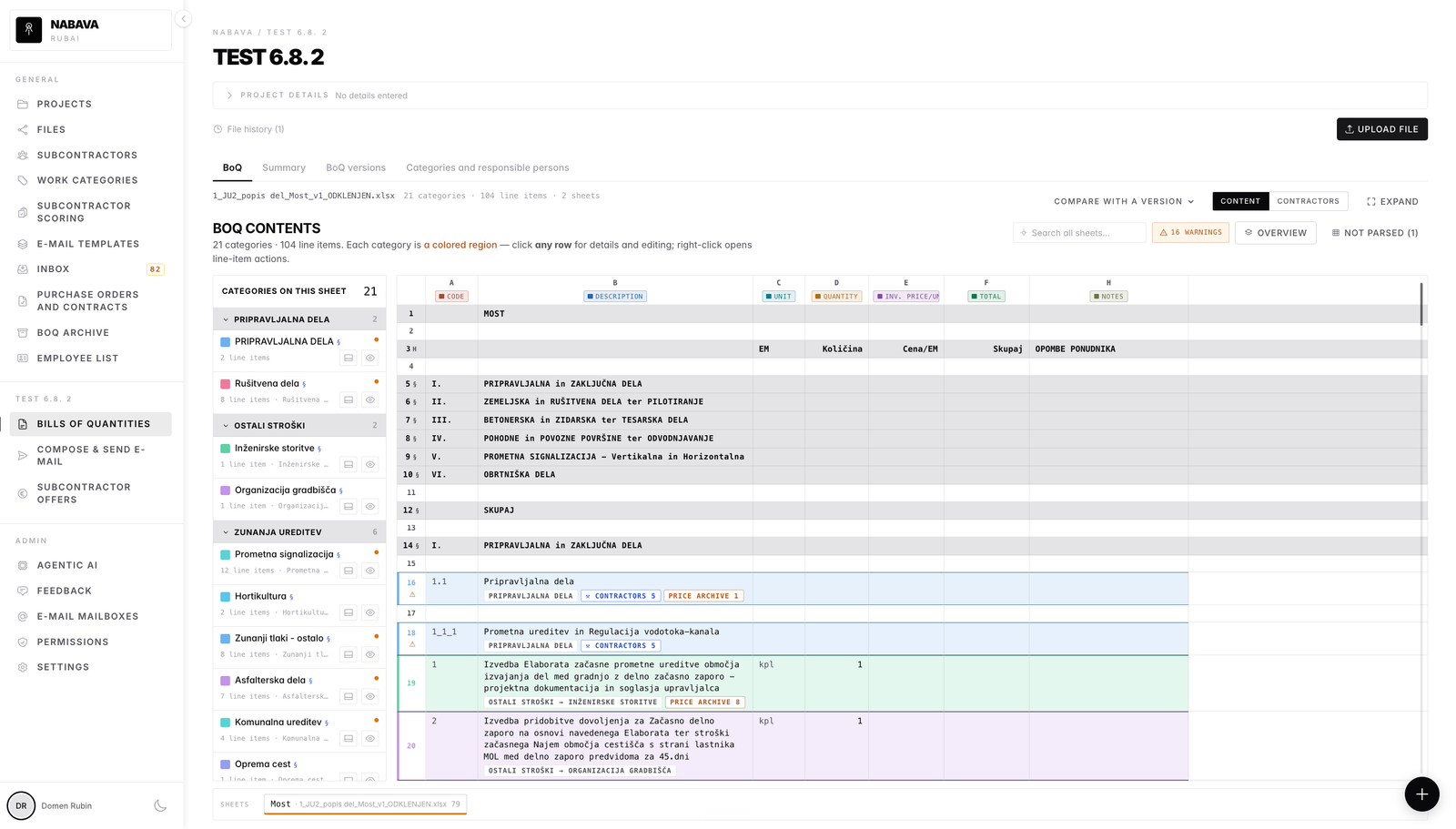
Tosidos runs construction projects, the kind of work where the margin is decided long before anyone pours concrete. Like most companies their size, they ran on the standard stack: a patchwork of legacy software, Excel files that only their authors understood, and processes held together by email and memory.
It was manageable. Construction companies are resilient like that. But every year it worked a little harder: more manual steps, more copy-pasting between tools that don't talk to each other, more knowledge locked in individual inboxes. The people were never the problem. The operating setup was.
There was no company-wide AI strategy. There was one workflow: Site documentation preparation and one question: what would this look like if we built it properly instead of patching it?
The first system replaced a manual, spreadsheet-driven process end to end. Not a plugin on top of the old way of working, a new way of working. It went into daily use before anything else was discussed, and nobody had to be convinced to use it. That's the test.
Then the question changed from "does this work?" to "what else runs on Excel that shouldn't?"
DEPARTMENT
From there we moved through the operation, system by system. Custom software replaced tools they'd been renting but never quite fit. Excel files became applications with structure, history and access instead of versions named final_v3. Internal communication moved out of inboxes and into the systems where the work actually happens.
Each build was measured the same way: less manual work than before, or it doesn't ship. No pilots that never left the lab.
The deeper change was the people. Alongside the building, we trained the team to work with AI directly. Not as users of our tools, but as operators of their own.
Today they don't just run the systems. They spot automation candidates themselves, ask for the next build, and can tell a good one from a bad one, which is rarer and worth more than any single tool we shipped.
Tosidos today runs on software built for how they actually work, not software they adapted themselves to. Less Excel, less copy-pasting, fewer subscriptions for tools that almost fit. More of the company's hours going into projects instead of paperwork.
And the part that doesn't show up on a feature list: every next process is cheaper to modernize than the last, because the maps, the data and the habits already exist. Most companies pay the full price of transformation every time they start. Tosidos paid it once.